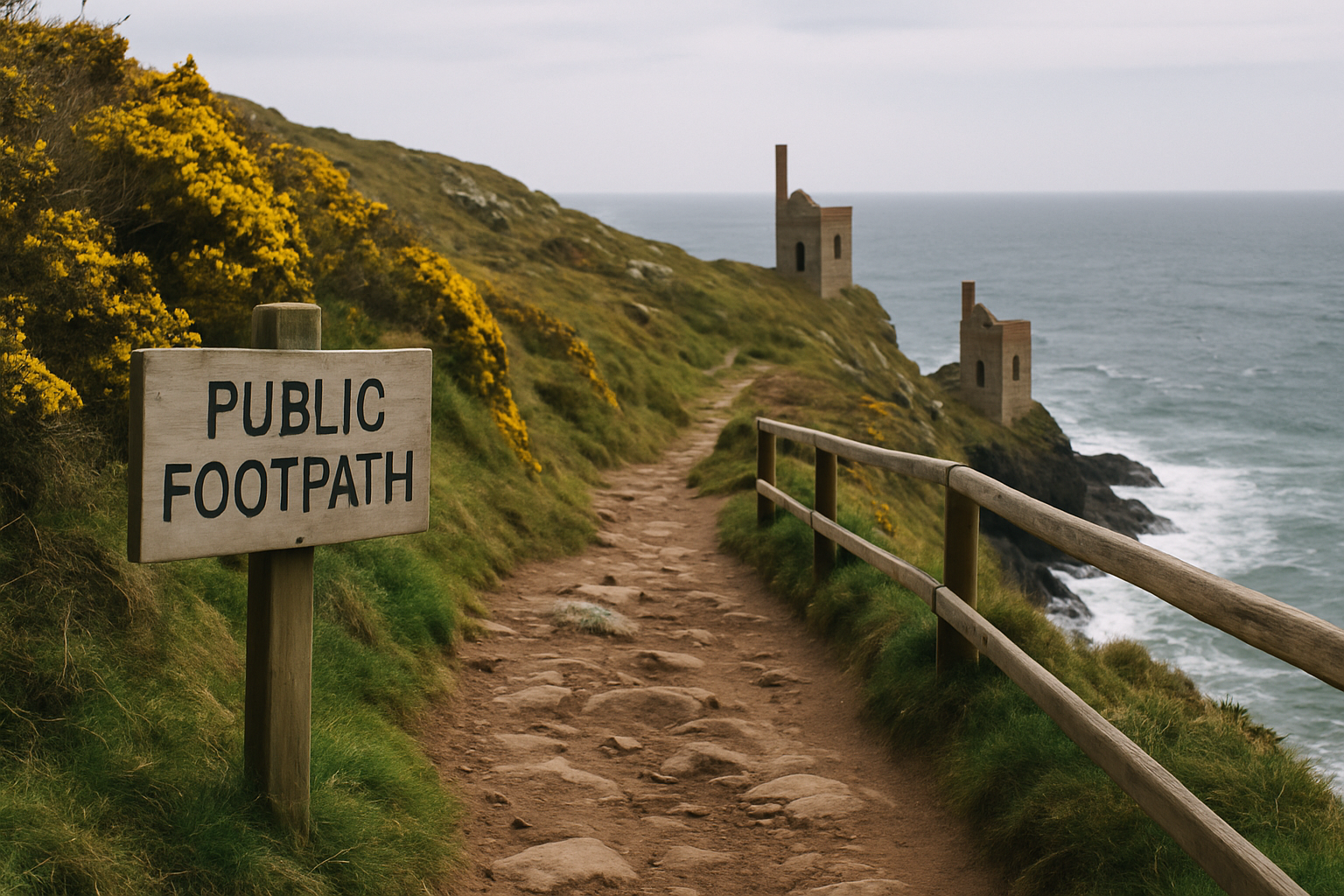
Botallack and the Crowns
Botallack sits on the cliffs north of St Just, within the same Tin Coast stretch as Levant, and is best known for the Crowns — two dramatic engine houses built directly onto rocks below the cliff top. The mine worked from 1815 to 1914, and in 2006 it became part of the Cornwall and West Devon Mining Landscape UNESCO World Heritage Site, recognised for its role in the wider St Just mining district.
A cliff-shaped industrial site
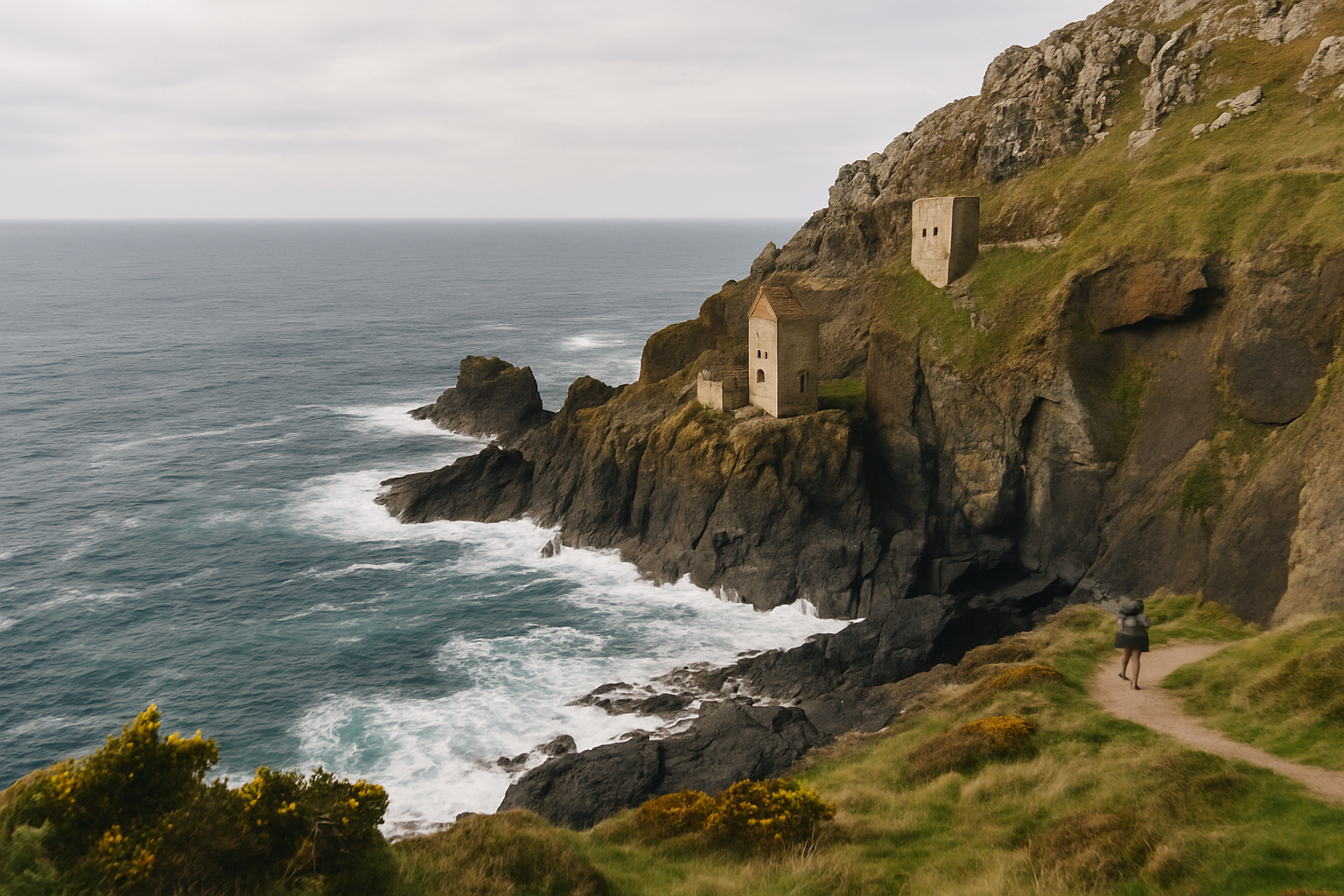
The two Crowns engine houses were built in the 1830s and 1860s from Cornish granite and brick, named for the Crowns rocks they sit on. The lower building housed a pumping engine that kept the mine's deep shafts clear of water, while the upper building held a winding engine that moved miners and materials in and out of the workings. During its working life, Botallack produced substantial quantities of copper, tin and arsenic, and in 1858 miners drove the remarkable Boscawen Diagonal Shaft out under the seabed to reach lodes running over a third of a mile beneath the Atlantic. The Carn Brea Mining Society restored the Crowns engine houses in 1985, and the National Trust took over the site in 1997, ahead of UNESCO inscription in 2006.
- Site type
- National Trust-managed coastal mine remains
- Access
- Open access paths; verify current National Trust guidance
- Time
- Allow 1–2 hours
What to look for
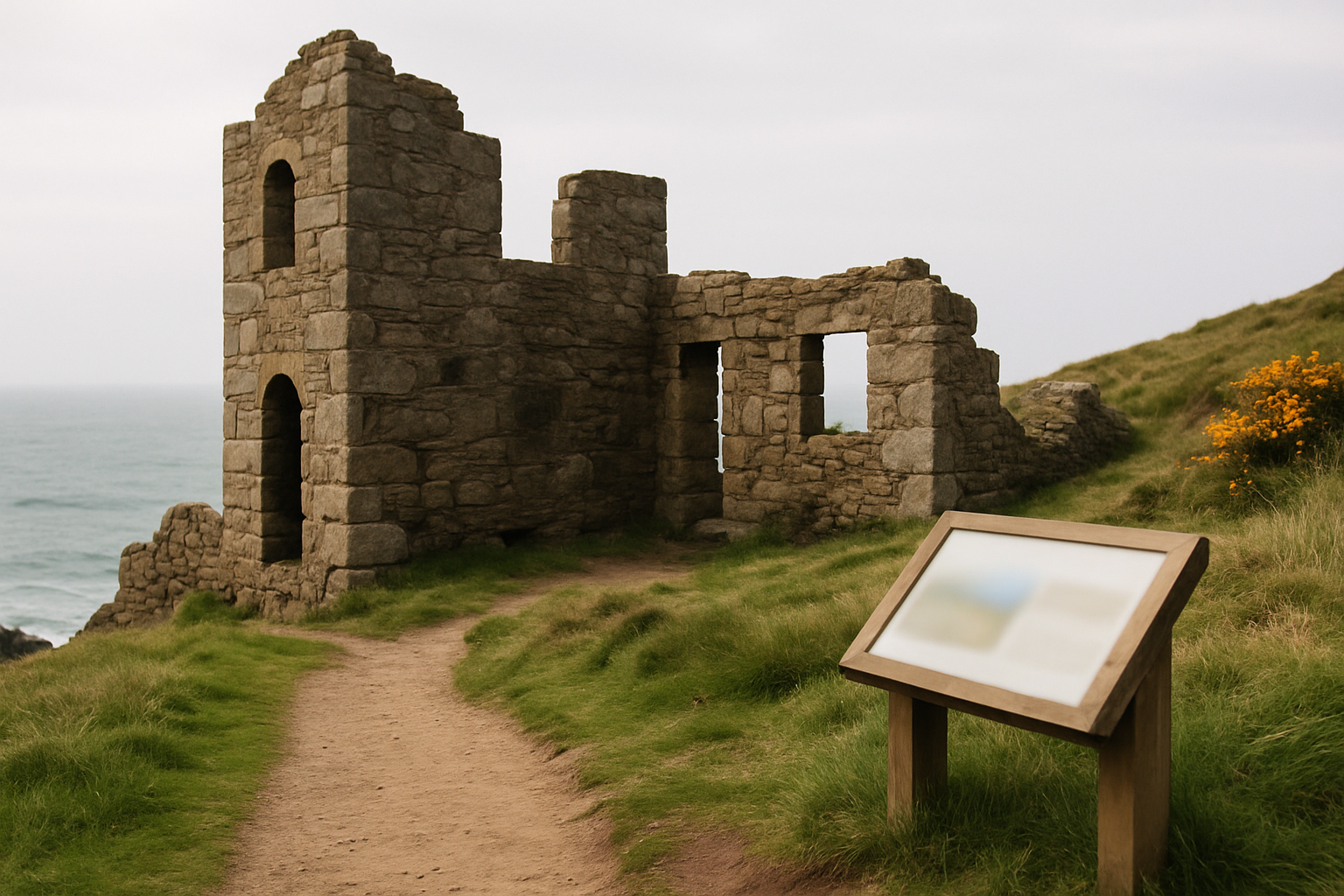
From the upper path, look for the two Crowns engine houses stacked at different levels on the cliff face — the lower one nearer the sea handled pumping, the upper one winding. Further inland, scattered masonry, spoil heaps and capped shaft openings mark the wider extent of the mine, now managed and clearly signed by the National Trust. Interpretation panels along the path explain what each visible feature originally did, without requiring you to leave the path or enter any structure to understand the site. Look too at the relationship between the buildings and the sea — the closeness of industrial machinery to the cliff edge is itself part of what makes this landscape distinctive.
Plan the visit
Botallack has a small National Trust car park with limited spaces that fill quickly in summer; arriving early or using the coast path from Levant or St Just are good alternatives. The path down toward the Crowns involves a steep, uneven descent on maintained steps, which can be slippery in wet weather — sturdy footwear is essential. The site connects directly to the coast path, making it easy to combine with a longer walk toward Levant or Cape Cornwall. There are no catering facilities on-site, so plan to eat in St Just before or after. As with any heritage site, keep to marked paths and take photographs without touching or climbing on the structures.